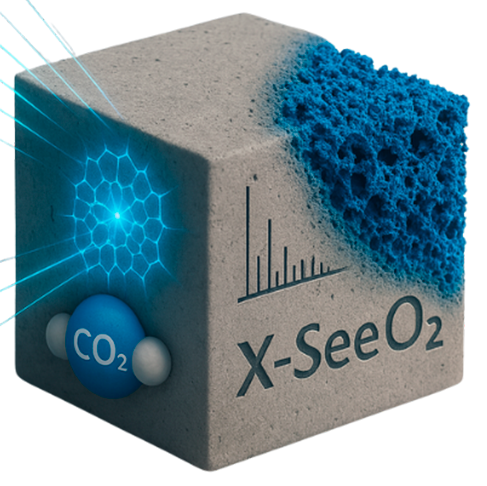
Real-time X-ray diffraction and microstructure imaging:
accelerating the transformation of cementitious materials into CO2 sinks
X-SeeO2
Horizon Europe project, call HORIZON-EIC-2024-PATHFINDER CHALLENGES, which will accelerate the use of cements as carbon dioxide ‘sinks’, to reduce emissions, but maintaining the properties of concrete and without affecting the durability of the resulting infrastructure.

Project data
Duration: 2025/10/10 – 2029/09/30
Funding programme:
Horizon Europe – European Innovation Council (EIC) Pathfinder Challenges
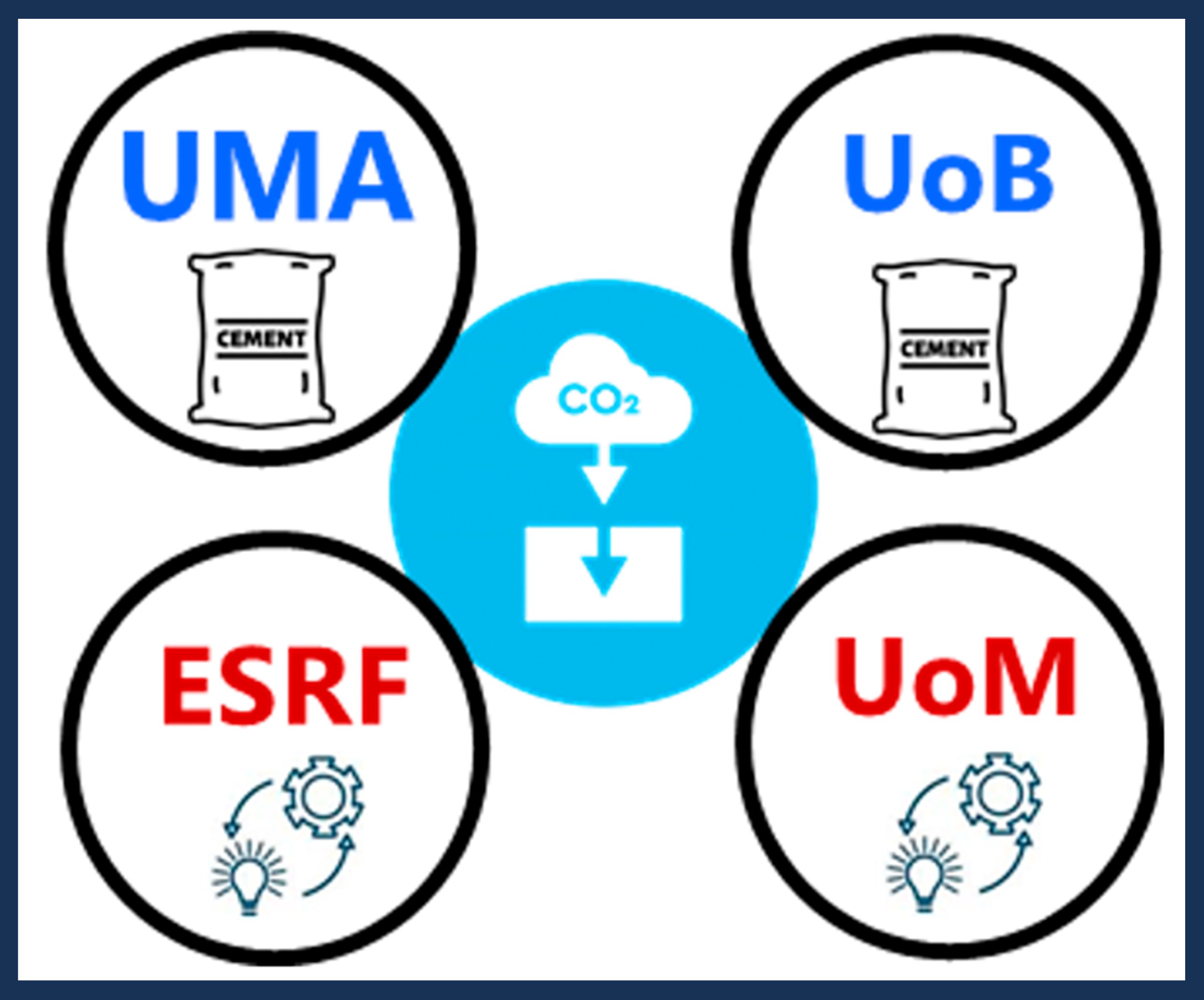
Coordinator: University of Málaga – UMA.
Partners: University of Bath- UoB, University of Manchester- UoM, European Synchrotron Radiation Facility – ESRF.
Budget: €4.04 million
Grant agreement number: 101220926
The project aims to develop innovative technologies to support sustainable cement production by capturing and using CO₂ emissions.
Coordinated by the University of Malaga, the consortium unites leading institutions from Spain, the UK, and France under the Horizon Europe – EIC Pathfinder Challenges.
Find out more48
Months
4
Partners
4
Countries
4.04 M
Funding
6
Projects
OUR FOCUS AND MISSION
Scientific rigor
Interdisciplinary collaboration
Clear objectives
Real-world applications
Objectives & Methodologies
Key features targeting success
X-SeeO₂ aims to accelerate innovations for the decarbonisation of cement and the smart carbonation of concretes.
The project combines advanced synchrotron-based and laboratory X-ray analysis with innovative workflows, outreach, and real-world validation.

Objective 1
Enabling Technology
Provide access to state-of-the-art X-ray analytical techniques [X-ray powder diffraction (XRPD) and microtomography (μCT)] and data analysis tools to advance understanding of cementitious materials.

Objective 2
Workflow Development
Design and validate synchrotron-compatible in-situ carbonation cells [XRPD & μCT] and standardised analytical workflows to ensure robust, comparable and reliable data.

Objective 3
Outreach & Training
Deliver training and dissemination activities to share methodologies and results across the Challenge project portfolio.

Objective 4
Case Study 1
Investigate mechanochemical activation (MCA) of industrial wastes under CO₂ conditions to develop new supplementary cementitious materials (SCMs).

Objective 5
Case Study 2
Develop and test autoclave CO₂-cured binders and innovative SCMs under varied experimental conditions to optimise performance and sustainability.
Visit our project page
Find out moreCONSORTIUM
The X-SeeO₂ consortium is formed by three leading universities in cementitious materials, carbonation and advanced X-ray imaging [i.e. University of Malaga (UMA), University of Bath (UoB) and University of Manchester (UoM)] and the European Synchrotron Radiation Facility (ESRF).
University of Málaga
Cement Science Group
Expertise in cement reactivity and analysis.
Advanced XRPD + µ-CT methods for accurate analytical characterization and CO₂-curing studies.
University of Bath
Experts in cement chemistry and characterisation, the University of Bath team develops and models advanced cementitious materials, with a focus on carbonation in Portland and non-Portland systems.

University of Manchester
Henry Rocye Institute
UoM provides world-leading expertise and facilities in advanced X-ray imaging, applying Correl-CT algorithms for time-lapse CT reconstruction. It leads national initiatives (NXCT, EPSRC–ESRF link) that supply imaging access and expertise.
Find out more HRI UoM
Discover our projects
The knowledge that X-SeeO₂ will generate will be fundamental for the proposals of our challenge and for the advancement of the science and engineering of construction materials. The highest priority is research aimed at reducing CO₂ emissions and promoting the circular economy by recovering waste.
CILANTRO
Coordinator: CSIC-IEdT-Madrid.
Duration: 4 years
CARBON-NEGATIVE CEMENT: A TRIBOLOGICAL SOLUTION FOR LIMESTONE DECARBONATION, SILICATION AND CARBON UTILIZATION
CILANTRO website cordis
ECO-SLAG-CEM
Coordinator: Ecocem Materials Ld.
Duration: 4 years
ENVIRONMENTALLY COMPATIBLE OPTIMIZATION OF EAF SLAG FOR LOW-CARBON ADVANCED GREEN CEMENT
ECO-SLAG-CEM website cordis
MOJITO
Coordinator: U. Bologna.
Duration: 3 years
DECARBONIZED LIME PRODUCTION THROUGH ENHANCED JOINT DIELECTRIC HEATING AND WASTE CARBONACEOUS MATERIAL ADDITION
MOJITO website cordis
CONCERTO
Coordinator: CNRS-Paris.
Duration: 4 years
CARBON NEGATIVE CEMENT FROM ULTRA-MAFIC ROCKS.
CONCERTO website cordis
X-SeeO2
Coordinator: University of Málaga – UMA.
Duration: 4 years
REAL-TIME X-RAY DIFFRACTION AND MICROSTRUCTURE IMAGING: ACCELERATING THE TRANSFORMATION OF CEMENTITIOUS MATERIALS INTO CO2 SINKS.
X-SeeO2 website cordis
Coordinator:
Duration:
Recent News and Events

EIC-backed innovators, webinar to explore key EU funding opportunities beyond the EIC
30 de October de 2025
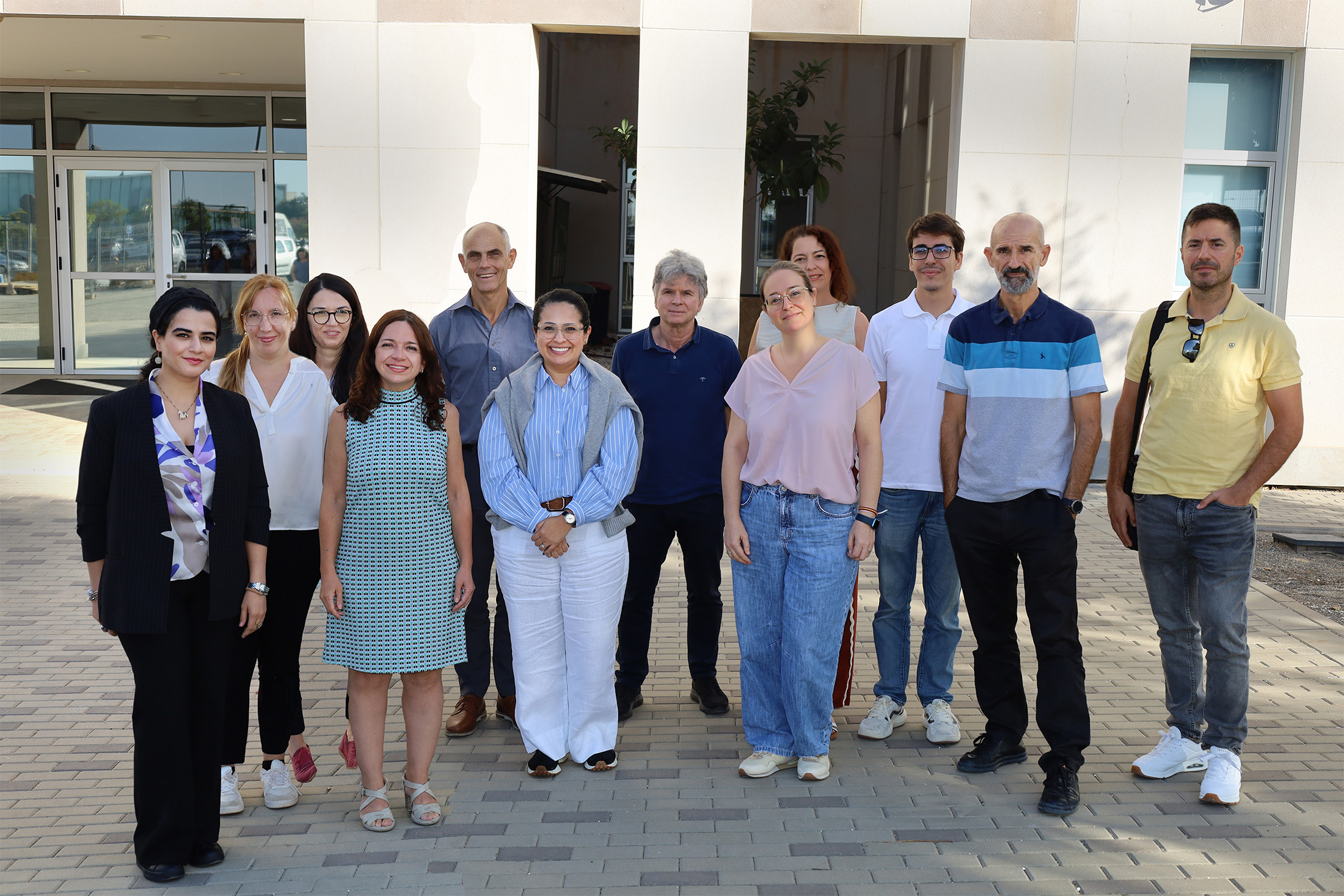
X-SeeO2 Kick-off Meeting, October 9
28 de October de 2025